
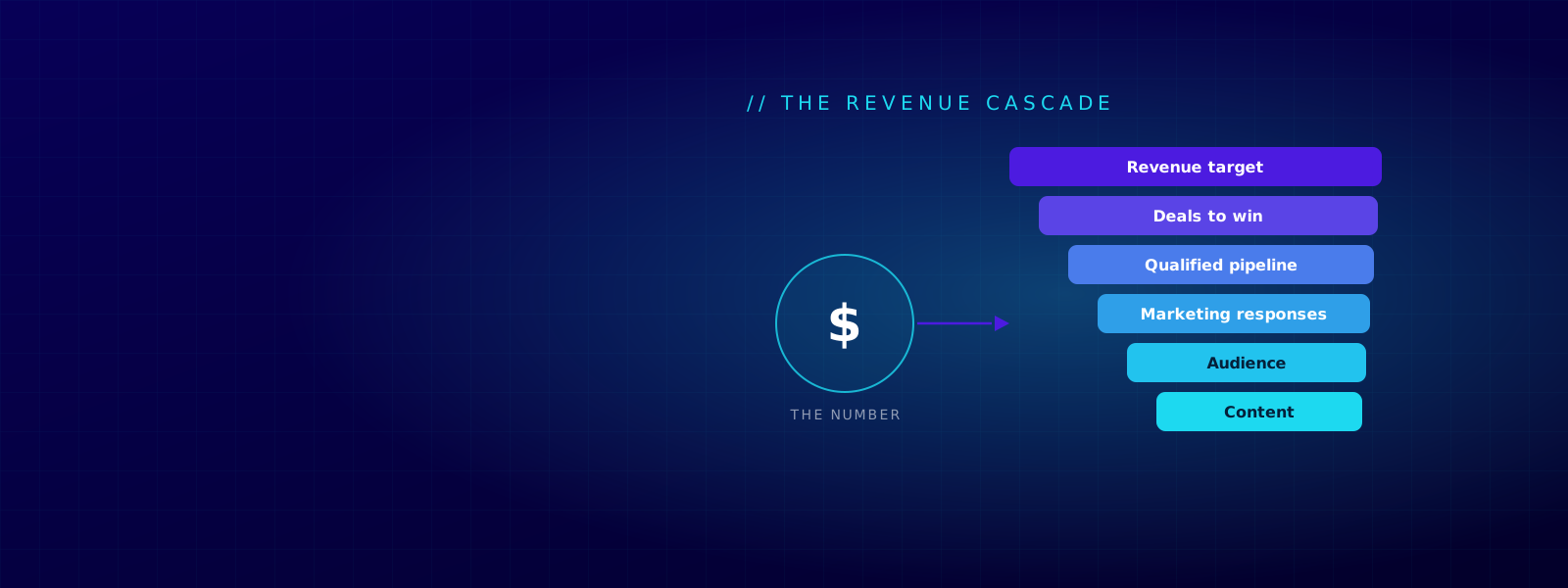
The Revenue Cascade: Start With the Revenue Target
Ask most marketing teams how they built this year’s plan and the answer starts with activity. We looked at what worked last year, kept the winners, added a few new bets, and spread it across the calendar. It sounds reasonable. The problem is that an activity-first plan can tell you what you intend to do, but it cannot tell you whether any of it adds up to the number you are on the hook for.
The Revenue Cascade inverts the exercise. Instead of starting with activity and hoping it produces revenue, you start with the revenue target and derive the activity it requires, one layer at a time.
What the Revenue Cascade is
The Revenue Cascade is a model that connects a single business outcome (the revenue marketing is expected to influence) to the marketing quantities underneath it. Each layer converts into the next through a rate you already know or can estimate, so the whole plan hangs together from the number down.
The layers
Read it from the top down:
- Revenue target. The new revenue the plan exists to produce.
- Deals. Divide the target by average deal size to get the deals marketing needs to help win.
- Pipeline. Divide deals by win rate to get the qualified pipeline required.
- Responses. Divide pipeline by your response-to-opportunity rate to get the marketing responses you need.
- Audience and promotion. Divide responses by conversion rate to get the audience you must reach and the volume of promotion behind it.
- Content. The promotion volume tells you how much promoted content to produce, and at what cadence.
Every arrow is a conversion assumption. That is the point. The cascade does not hide the math, it puts it on the table.
Why starting with the number changes the plan
An activity-first plan is a list of intentions. It looks busy and it feels productive, but it has no built-in test. You cannot look at the activity and know if it is enough. Start with the revenue target instead, and every layer has a test. If the responses the cascade requires are more than your current audience and cadence can produce, the plan is short, and you can see exactly where and by how much. The gap becomes visible before the quarter starts, not after it ends.
The assumptions are the argument
The most useful thing about the cascade is that it forces the assumptions into the open. Win rate, response-to-opportunity, conversion rate: these are the numbers that decide whether the plan is realistic, and in most teams they live in someone’s head or a stale spreadsheet. Written into the cascade, they become debatable. A sales leader can challenge the win rate. A demand leader can defend the conversion rate. The plan stops being a wish and becomes a shared, honest model that everyone can pressure-test.
The bigger payoff comes once the year is underway. Because every rate is written down, each one becomes a dial you can measure against as the results come in. When pipeline is light, you do not argue about effort. You read the dials: maybe response-to-opportunity held but win rate slipped, or one content type is converting below plan. The cascade tells you which assumption is off, so you fix the right thing instead of adding more activity and hoping. A plan built as a set of assumptions is a plan you can debug.
When the number moves, the cascade moves
Targets change. When they do, an activity-first plan has to be rebuilt by hand, so it rarely gets updated and slowly drifts from reality. A cascade recalculates. Raise the target and the responses, audience, and content requirement all move with it. Lower it and the plan gets lighter. Because the layers are connected by rates, the plan stays current as the business changes, instead of becoming a document that described a moment in the past.
The Revenue Cascade turns the vaguest question in marketing into one with an answer: are we doing enough? Start from the number, convert down through the layers, argue the assumptions in the open, and let the plan move when the number moves. That is the difference between a plan you present and a plan you can trust.
To see the cascade run on your own target, try the Growth calculator. To turn the output into a full plan, read How to Build a B2B Marketing Plan From Your Revenue Number.